M.S. Mechanical & Aerospace Engineering
University of California, Davis
SEP 2024 — DEC 2026 (EXPECTED)
Design. Simulate. Build. I design, simulate, and build mechanical systems end-to-end — from FEA-validated CAD models to instrumented test rigs on the shop floor. Currently researching heavy-equipment safety systems with Caltrans at UC Davis.

Hi, I am Pravin Salla — a Mechanical Engineer with a hands-on approach to design, testing, and problem solving, drawn to projects where an idea has to survive contact with real hardware and real data.
I'm currently completing my M.S. in Mechanical & Aerospace Engineering at UC Davis, where my work centers on applied research: taking a system from a CAD model through instrumentation, testing, and analysis to a conclusion backed by data rather than assumption. My background spans a mix of research and industry-style engineering — from friction and wear testing on custom rigs, to rapid prototyping and molding tooling for consumer products, to training students on CNC machining and the full CAD-to-CAM workflow. That range has given me a practical feel for what it takes to move a design from concept to something that actually gets built.
I work comfortably across CAD tools like SolidWorks, Fusion 360, CATIA, and Onshape, alongside ANSYS (Mechanical, Fluent, and Additive) and MATLAB (Simulink, Simscape) — and I like bringing a structured, data-driven approach to problems that mix mechanical design with manufacturability and real-world use.

University of California, Davis
SEP 2024 — DEC 2026 (EXPECTED)
Somaiya Vidyavihar University
SEP 2020 — JUN 2024
Applied research with Caltrans, manufacturing instruction at UC Davis, and product design in industry.
UC Davis — AHMCT Research Center (with Caltrans)
University of California, Davis
Ayka Control Systems
First-principles engineering: a wind tunnel built from scratch, instrumented tribology, and peer-reviewed vibration research.

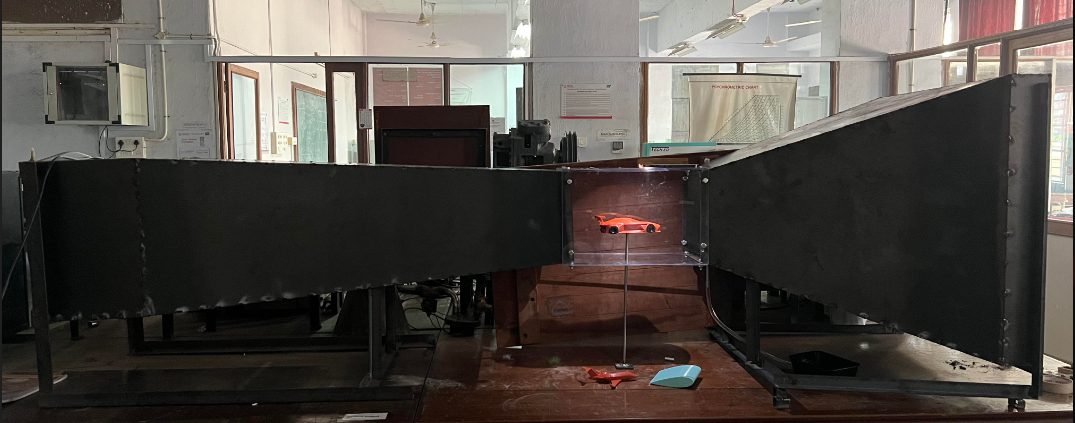
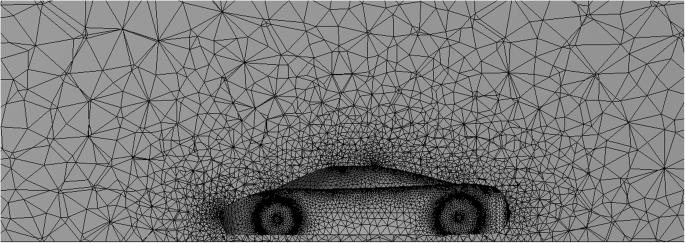
Designed and fabricated an open-circuit, suction-type wind tunnel from first principles — 8.29-ratio contraction cone, hexagonal honeycomb settling chamber, 250×250×400 mm transparent acrylic test section, and diffuser — in SolidWorks, welded steel, and acrylic. Validated in ANSYS Fluent (k-ω, ~836K-node mesh), achieving 9.4 m/s test-section velocity at turbulence intensity as low as 0.42%, confirmed via smoke visualization and anemometer testing on 3D-printed airfoil and vehicle models.
Co-authored peer-reviewed study (Desai, Salla, et al.) on unbalance fault diagnosis using a Machinery Fault Simulator — FFT-based vibration analysis quantifying the effects of unbalance mass magnitude (1.4–4.96 g), angular position, and rotational speed in single- and multi-plane configurations. SolidWorks rotor models and ANSYS modal analysis validated natural frequencies against experiment with deviations generally below 10%.

Characterized friction on a cylindrical grinder's linear axis using a reciprocating sled setup at MASTER Lab, UC Davis — integrating load cell and potentiometer signals via NI DAQ. Built MATLAB scripts converting raw voltage to physical units, segmenting strokes, and analyzing friction-velocity trends and cycle-to-cycle repeatability for servo sizing and tribological studies.

Modelled a Koenigsegg Jesko Absolut in SolidWorks and ran ANSYS Fluent CFD (k-ε, 1,098,393 elements) across spoiler, wing, diffuser, and fin configurations at 150 km/h. The spoiler + diffuser combination cut drag coefficient 16.53% below baseline while diffusers reduced drag in every tested case; wings traded +27.8% drag for significant downforce (Cl −0.115 with diffuser). Findings drawn from pressure contours and velocity streamline analysis.
MORE PROJECTS & CAD FILES AVAILABLE ON REQUEST
The full stack of a mechanical engineer — from parametric CAD and multiphysics simulation to the machine shop.
Open to full-time mechanical engineering roles from December 2026. Every message lands directly in my inbox.